25 June 2026
JavaScript is the new Assembly
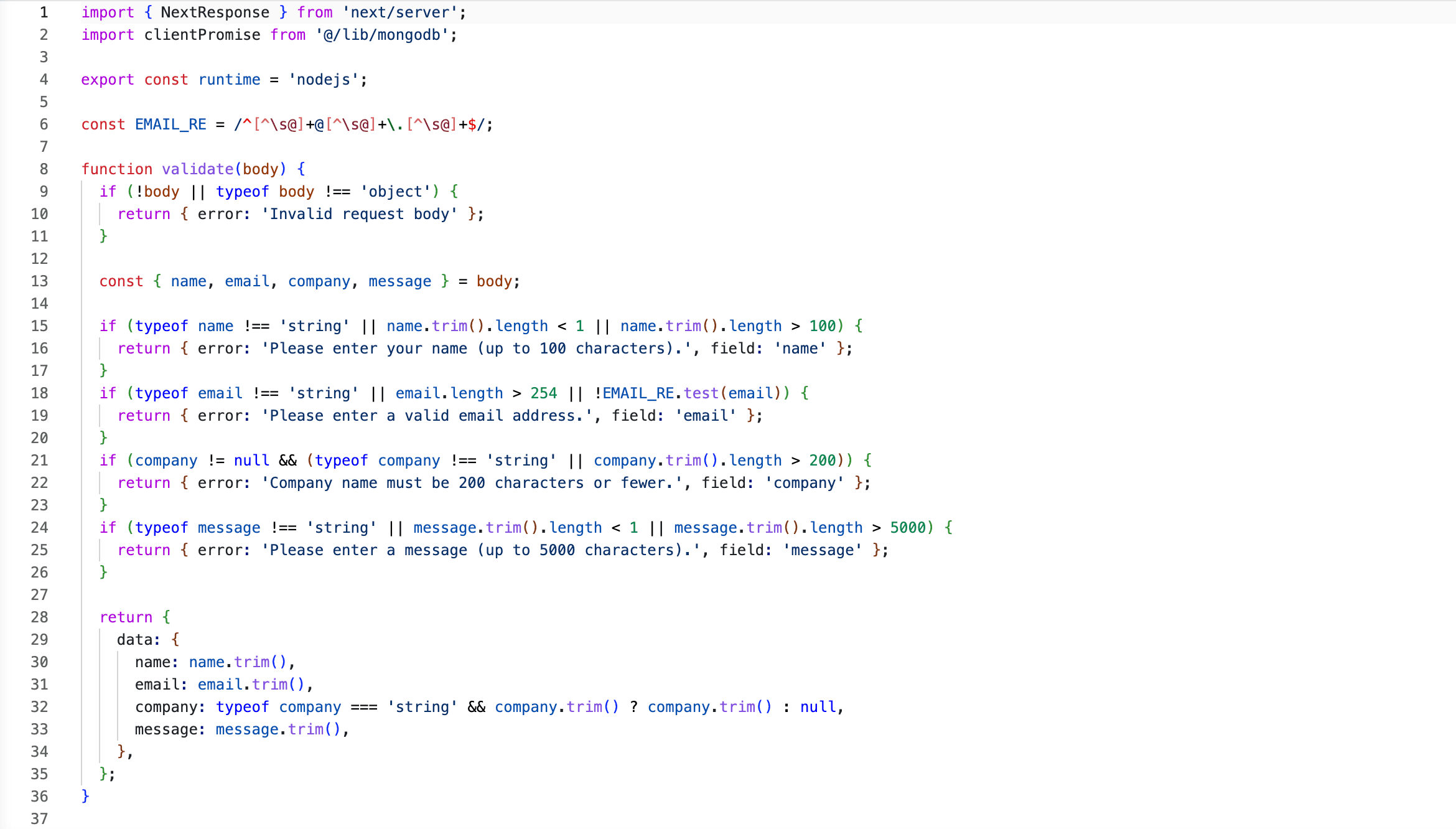
Less Coding more Outputs
I've worked on a couple of projects now in the new AI era and I've started to notice that I care less and less about the code being written and I'm more focused on the output.
Originally I would view the code from another engineer who used AI and immediately give them feedback, multiple comments and wouldn't approve until the changes were made. This was because the code that was being produced wasn't good enough - it lacked any software or coding patterns it was overly complex and in some cases it didn't do what it was supposed to do.
Now I've made a transitions from prompting to spec driven to spec driven with agents where I no longer look at code. I'm more focused on the outputs - does the application or service do what is detailed by the requirements. Does the service get the data from the database correctly and formatted, does the frontend support correct roles and claims, does my session get cleared when I log out?
Software Architecture
Knowing how to design software architecture well is a skill which all engineers will need to have in the agentic world. As they focus less on coding and more on outputs they will need to ensure that there applications can communicate at scale when deployed, they need to ensure that they've considered the appropriate storage options etc. They need to design for security, performance etc.
Knowing how to design solutions is also changing but not as rapidly as engineering because of the nature of work. Agents without enough context will make "predictions" about how software should be modelled which won't work in all scenarios. When working within environments that have specific standards and rules AI will need strict guidelines on which application types should be built and which services can talk to others.
JavaScript is the new Assembly
Most engineers today won't know anything about machine or assembly language and it's because they don't need to know. Having an understanding of how they can build optimal outcomes in their language of choice is the skill that they bring to organisations. Knowing which libraries to use, knowing how to apply coding patterns given a set of requirements, knowing how to implement a feature based on previous experience are some of the skills engineers bring.
Knowing how best to utilise and build agents is a paradigm shift that engineers will have to take due to the efficiency that agentic engineering brings. It's no longer important to care about variable naming conventions or coding patterns as long as the output is as expected.
Creating agents that can verify other agents is also now a skill. There is still a need to ensure that the code is tested, secure, accessible and performant but engineers don't need to know the nuance of blocking threads. They need to know how to build agents which can produce a verifiable output against these scenarios.
So knowing how to apply agent coding practices (e.g. prompt engineering, spec driven development, skills creation, MCP creation, agent creation) and principals while focusing less on the code quality is the paradigm shift that engineers need to adopt. Organisations that fail to allow their engineers to shift to agentic coding will suffer from the growth benefits that the engineering department would have or they may be victim to "shadow AI" where AI is used unofficially.
Atrophy and Automation Bias
One of the caveats for abstracting code to another level and focus solely on outcomes is the beginnings of a lost of knowledge on how the underlying code works. For simple applications this is not too problematic because an effective agentic strategy will get you the results you need but for a larger enterprise application this may result in the lost of understanding of specific processes or patterns that were undertaken to achieve a result.
There are ways to remediate this by ensuring that documentation is rich and well understood but most docs are now just read by AI 😛. When pursing a strategy of agentic engineering and adopting (in some cases) speed over (agile) velocity you may find that you're at risk of producing outcomes at the price of other fundamental features, such as extensibility or security.
Conclusion
There is no longer an engineering world where AI doesn't reside hence it's important to utilise AI alongside teams in such a way that it does not become an outsourcing for all knowledge but remains a powerful tool for building outcomes.